30 existing railway arches in South Bermondsey will be refurbished and transformed into flexible industrial space, with new drainage, external works, and phased structural interventions.
Sector
Client
The Arch Company Properties Limited
Architect
Lewis & Hickey
Budget
Undisclosed
Status
Currently on site
Year
Photography
SD Engineers
SD Team
Declan Goodfellow Konstantina Zindrou Oliver Brown Jean Benard Hayley Chessman
Download PDF
The phased refurbishment of 30 existing arches beneath a live railway will see the introduction of new flexible industrial units, with bike stores, and cycle parking.
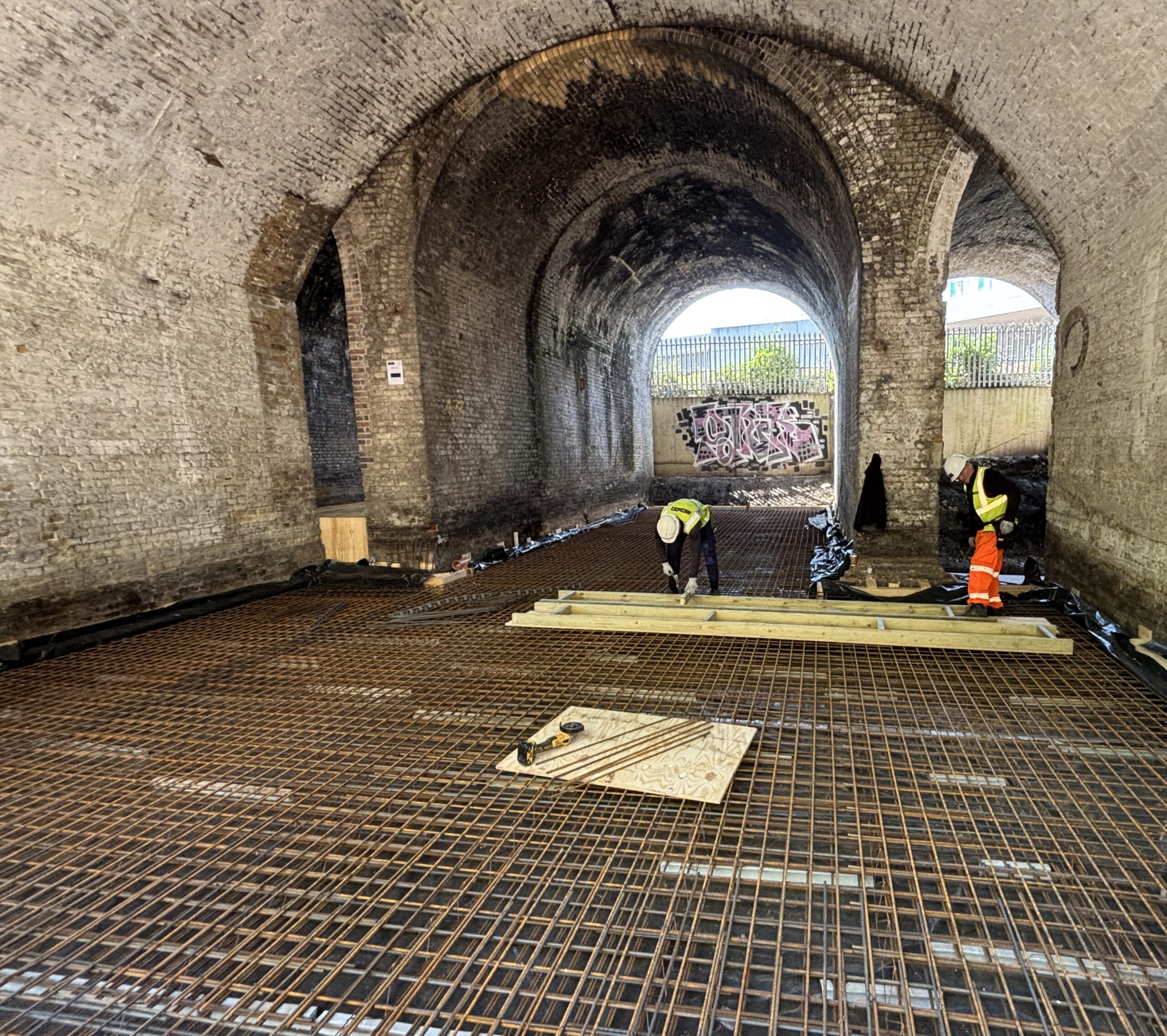
We are providing the structural and civil engineering design for Stage 4 and 5.
The project involves the replacement of the existing arch frontages and foundation slabs, with the new slabs being installed at a lower level to improve floor to ceiling heights to allow for greater flexibility of the space. Several of the new foundation slabs were designed to have the option of installing a future mezzanine by tenants at a later date.
As part of the external works packages, new retaining walls were required to manage level differences and a new UKPN substation construction to provide power to the arches.
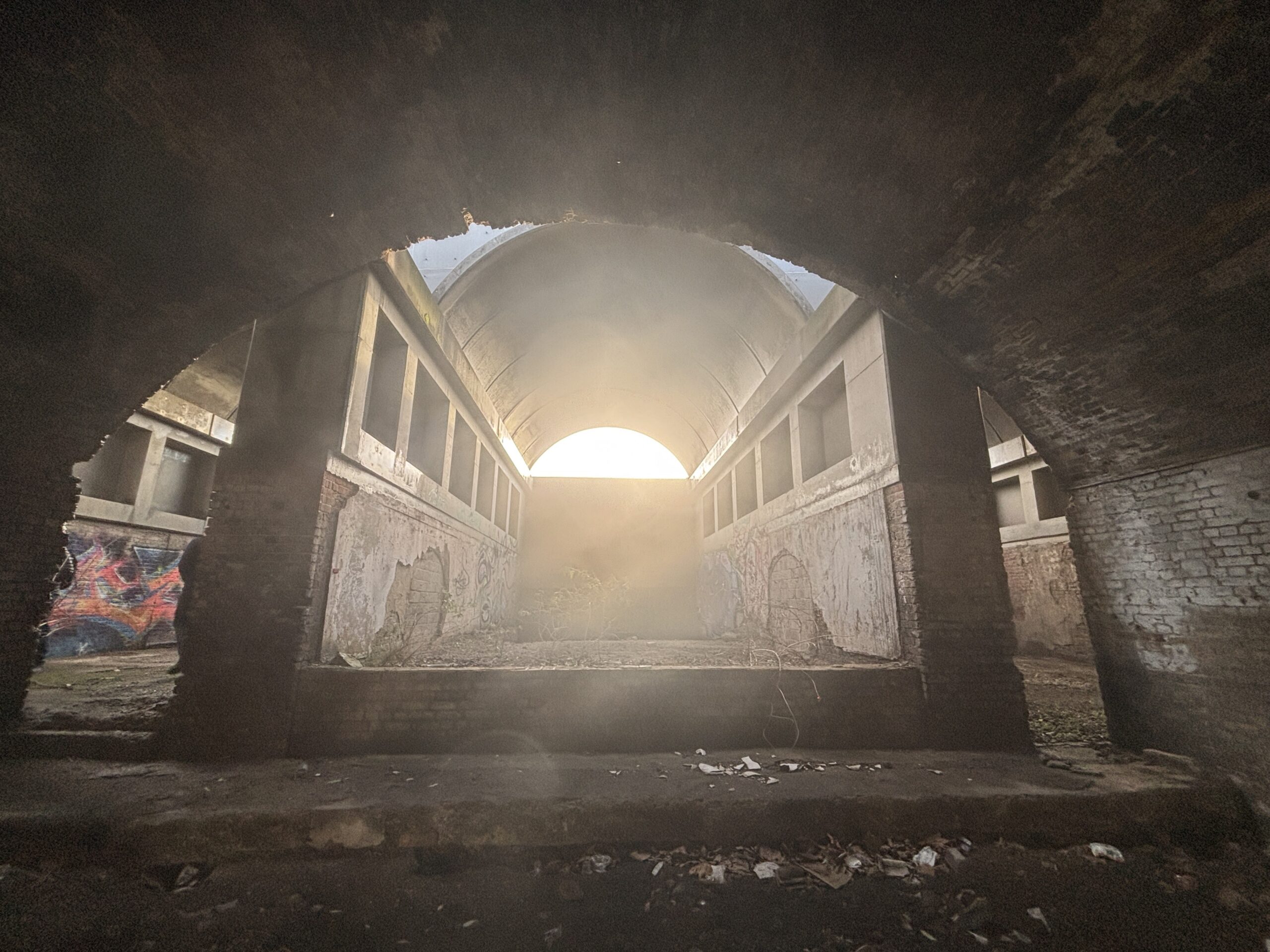

The key challenge of the site is the poor ground conditions; there is up to 4m of contaminated made ground and alluvial soils above the underlying gravels which have poor bearing capacity. The original foundation solution used deep strip foundations below the facades founded in the gravels below the ground bearing slabs internally. The strip foundations required deep excavations to construct and to dispose of a large volume of contaminated soil.

SD Engineers developed a performance driven raft foundation to omit the strip foundations resulting in a large reduction in contaminated spoil removal, omission of temporary works and improved efficiencies in the overall programme.
Our civil engineering design has been developed alongside the structural scope and uses a new gravity-fed below-ground drainage system serving the arches, with hardstanding, permeable paving, retaining walls, and front works.
Adding to the complexity of this project, the existing drainage records were incomplete, the condition of the drainage on site was unknown, and a Thames Water sewer runs beneath part of the arches and adjacent paved area.

A previous civil engineering design included separate foul and surface water drainage along the front of the arches, connecting to a demarcation chamber before discharging to the combined Thames Water sewer. With inlets proposed from both sides of the runs, pipe clashes would have been likely. The constrained corridor also presented significant utility coordination challenges. Therefore, we coordinated with Building Control to successfully agree to combine the foul and surface water into a single run. This eliminated the clash risk, reduced the number of pipes in a congested zone, and materially simplified the overall drainage design.
Developing the design to construction level required careful coordination of proposed finish levels, foundations, and retained existing drainage, alongside close consideration of excavation constraints near the arch foundations.
Our engineering proposals are designed to support buildability – we provided a practical sequence of construction and coordination of the various structural interventions, drainage, and level changes across the site. This phased design approach has been central to how we have developed the project.